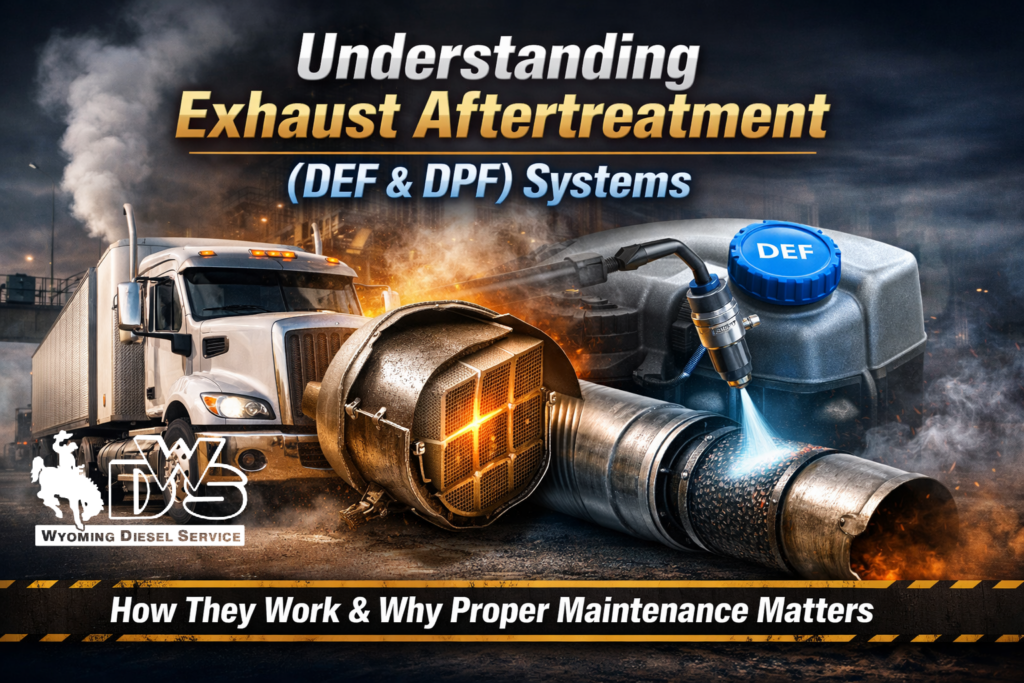
Modern diesel trucks are cleaner and more efficient than ever before. But that cleaner performance doesn’t just happen inside the engine — it’s largely due to the exhaust aftertreatment system working behind the scenes, including the DPF (Diesel Particulate Filter) and DEF (Diesel Exhaust Fluid) systems.
If you own or operate a diesel truck, understanding how your DEF and DPF systems work can save you thousands in repairs and costly downtime. Let’s break it down in simple terms.
What Is a Diesel Exhaust Aftertreatment System?
A diesel exhaust aftertreatment system is designed to reduce harmful emissions produced during diesel combustion. Since stricter EPA regulations were introduced, manufacturers added advanced components to clean exhaust gases before they exit the tailpipe.
The two primary components you’ll hear about are:
- DPF (Diesel Particulate Filter)
- DEF (Diesel Exhaust Fluid) / SCR (Selective Catalytic Reduction)
Each serves a different purpose.
Diesel Particulate Filter (DPF)
What It Does
The DPF captures and stores soot (particulate matter) created during combustion. Without it, the black smoke you used to see from older diesel trucks would go straight into the air.
How It Works
- Exhaust gases pass through a honeycomb-like ceramic filter.
- The filter traps soot particles.
- When soot builds up, the truck performs a regeneration cycle (regen).
- During regeneration, exhaust temperatures rise and burn the soot into ash.
Why DPF Problems Happen
- Frequent short trips that prevent full regeneration cycles
- Excessive idling
- Faulty sensors
- Ignoring warning lights
- Poor engine performance upstream (injectors, turbo, or EGR issues)
Heads up: If the DPF becomes clogged and regeneration fails, your truck can enter derate mode, which reduces engine power until the issue is repaired. Learn more in our article: What Is Diesel Engine Derate Mode?
Diesel Exhaust Fluid (DEF) & SCR System
What It Does
DEF works with the SCR system to reduce nitrogen oxides (NOx), which contribute to smog and air pollution.
How It Works
- DEF (a mixture of urea and purified water) is injected into the exhaust stream.
- It reacts with NOx gases inside the SCR catalyst.
- The reaction converts harmful gases into harmless nitrogen and water vapor.
Important Facts About DEF
- DEF freezes at 12°F (systems are designed to handle this).
- Contaminated DEF can cause serious system damage.
- Running out of DEF can trigger a speed restriction or a no-start condition.
Why Proper Maintenance Matters
Exhaust aftertreatment systems are highly effective, but they can also be expensive if neglected. The best strategy is staying ahead of small issues before they turn into major repairs.
Common Costs When Problems Are Ignored
- Forced regeneration service
- DPF cleaning or replacement
- DEF injector replacement
- SCR catalyst replacement
- Sensor replacement
- ECM programming updates
Proper maintenance is always cheaper than replacement.
Signs Your Aftertreatment System Needs Attention
Watch for the following warning signs:
- DPF or DEF warning lights
- Frequent regeneration cycles
- Reduced engine power (derate mode)
- Higher fuel consumption
- Poor throttle response
- Strong or unusual exhaust smell
Addressing these issues early can prevent major downtime and expensive repairs.
How to Protect Your DEF & DPF System
- Drive long enough for a full regeneration cycle when possible. Frequent short trips can prevent the system from cleaning itself properly.
- Do not ignore warning lights. The longer you wait, the more expensive repairs can become.
- Use quality DEF and store it sealed to prevent contamination.
- Stay current on preventive maintenance. Fuel, EGR, turbo, and injector issues can all affect the DPF.
- Schedule professional diagnostics when warning signs appear, as modern diesel systems require proper diagnostic tools.
Final Thoughts
Your diesel truck’s aftertreatment system plays a critical role in emissions compliance, engine performance, and long-term reliability. When it’s working properly, you may hardly notice it. When it’s neglected, however, it can quickly become one of the most expensive systems on the truck.
Need help with DEF or DPF diagnostics and repairs?
At Wyoming Diesel Service, our technicians diagnose diesel truck DEF and DPF problems, perform forced regeneration cycles, and repair aftertreatment system issues before they turn into major downtime.
If your truck is showing symptoms or warning lights, give us a call at 307-324-5144 and we’ll help get your truck back on the road.